Home › Common Problems › Poor Attic Ventilation
Poor Attic Ventilation
in Raleigh, NC
In Raleigh, a poorly ventilated attic can reach 160°F in summer. Wake County has many homes built in the 1970s and 1980s with ventilation designs that met older, weaker code minimums. Those designs were never meant to work with the energy-efficient upgrades added to these homes later. Left alone, the heat slowly destroys shingles from below and the moisture rots the sheathing, which is the wood deck under your shingles.
Raleigh Roof Repair Pros helps Raleigh, NC homeowners fix poor attic ventilation — call for a free inspection.
Quick Answer
Raleigh attics can hit 160°F in summer, and that trapped heat slowly cooks your shingles from below and rots the wood under them. Many older Wake County homes were never built to handle today's insulation levels, making this worse. A roofer checks your vents and adds what is needed to let hot air escape. Call (984) 500-1173 if your upstairs rooms stay stuffy and hot all summer.
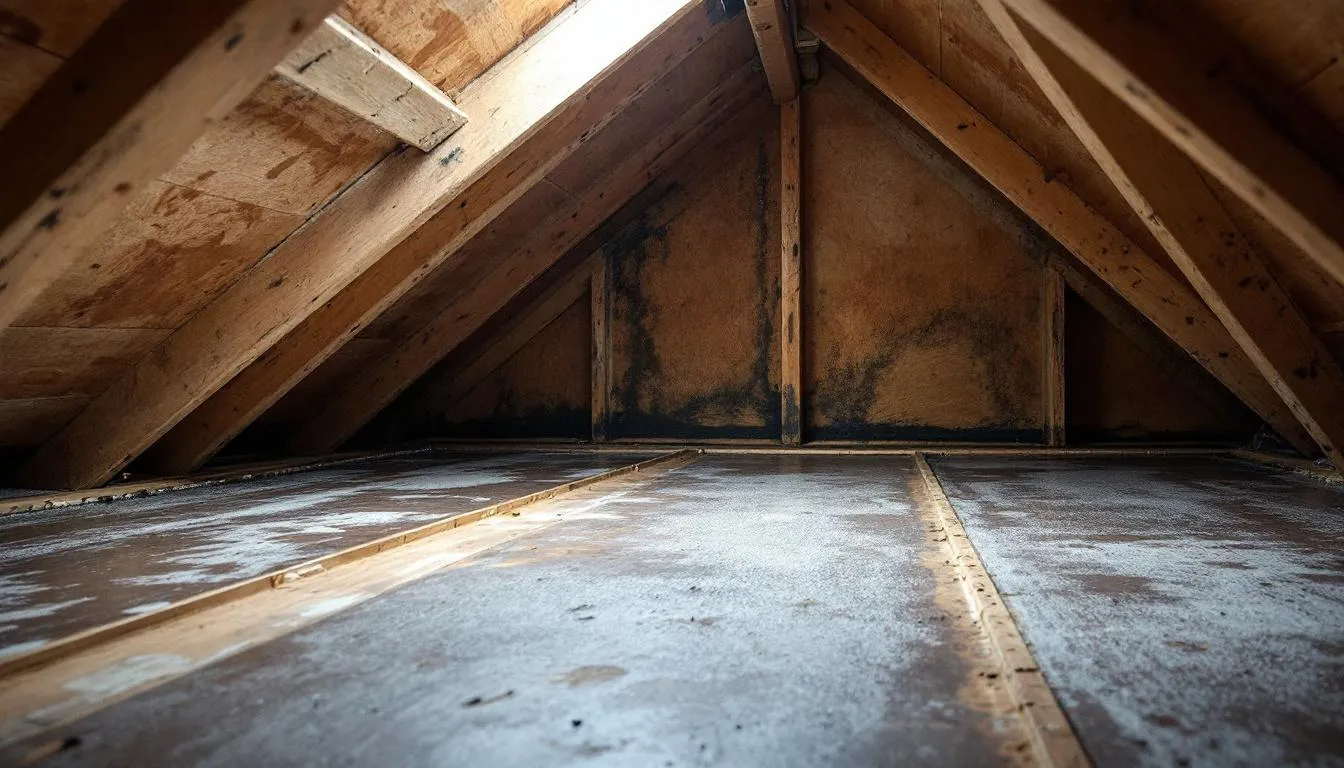
Telltale Signs
Warning Signs to Watch For
- Attic air feels extremely hot and stagnant when accessed in summer, even at night
- Frost or condensation visible on attic sheathing or rafters during winter cold snaps
- Shingles aging and granule-shedding faster than expected for their rated lifespan
- Ice dams forming at eaves after winter storms despite Raleigh's mild temperatures
- Energy bills rising noticeably in summer as attic heat radiates into living spaces
- Mold spots or dark staining spreading across attic sheathing panels near the eaves
Root Causes
What Causes Poor Attic Ventilation?
Blocked Soffit Vents
Many Raleigh homes got spray foam or dense-pack insulation during energy upgrade programs in the 2000s and 2010s. Contractors often buried the soffit vent baffles under that insulation. The baffles are cardboard or foam channels that keep a path open for outside air to enter. Without that inlet air, even a good ridge vent cannot move air through the attic, and heat and moisture build up against the wood.
The Fix
Soffit Vent Clearing and Baffle Installation
Insulation gets pulled back at each soffit vent bay and rafter baffles are put in place to keep a clear air channel open. Then the insulation goes back to code depth.
Inadequate Ridge Ventilation
Many older Raleigh homes have a few static box vents near the ridge instead of a continuous ridge vent. That setup creates hot and stagnant dead zones across the attic instead of even airflow. In Raleigh's climate, humidity from bathroom and kitchen exhaust leaks into those dead zones and causes condensation damage.
The Fix
Continuous Ridge Vent Installation
The old box vents are removed and the holes are closed up. A continuous slot is cut along the full ridge peak. A low-profile ridge vent designed for Raleigh's storm conditions is installed across the entire ridge length.
Exhaust Fan Termination in Attic
Building inspections across Wake County often find bathroom and kitchen exhaust fans dumping air into the attic instead of outside. That is a code violation. Raleigh's already-high humidity makes this worse. A family of four running exhaust fans can add enough moisture to cause mold and wood rot in just a few years.
The Fix
Exhaust Fan Re-Routing to Exterior
Each exhaust duct that ends in the attic gets extended with insulated flexible duct. It is then routed out through the roof or soffit with a proper cap and flashing so moisture no longer dumps into the attic.
Self-Diagnosis
Which Cause Applies to You?
Check the signs you're observing to narrow down the likely root cause before your inspection.
| What You're Seeing | Blocked Soffit Vents | Inadequate Ridge Ventilation | Exhaust Fan Termination in Attic |
|---|---|---|---|
| Attic inspection shows insulation packed against eaves covering soffit vent openings | |||
| Hot spots and cool spots across attic with several old box vents near ridge | |||
| Flexible duct visible in attic terminating with open end or into insulation | |||
| Condensation or frost concentrated near eaves in winter with dry ridge area | |||
| Even mold growth across all sheathing panels from eave to ridge | |||
| Mold growth concentrated in one section of attic near a bathroom or kitchen |
Free Quote
Get a free quote in Raleigh
No obligation — tell us what's going on and we'll text you back shortly.
Other Problems
Services That Fix This
Poor Attic Ventilation Near You
Also Helpful