Home › Common Problems › Missing or Blown-Off Shingles
Missing or Blown-Off Shingles
in Raleigh, NC
Raleigh sits in the path of frequent summer thunderstorms and hurricane remnants that push wind gusts well past 50 mph. Neighborhoods like North Hills, Brier Creek, and Garner all see shingle loss regularly. Many Triangle homes were built in the 1980s and 1990s using three-tab shingles rated for only 60 to 70 mph winds, and those shingles lose their seal strips over time. Even one missing shingle can let driving rain rot your roof deck and push water into your attic insulation within a single storm.
Raleigh Roof Repair Pros helps Raleigh, NC homeowners fix missing or blown-off shingles — call for a free inspection.
Quick Answer
Raleigh's summer storms and hurricane winds rip shingles off roofs, especially older three-tab shingles that have lost their grip over the years. A roofer replaces the missing shingles and checks that the ones around them are still sealed tight. Call (984) 500-1173 if you spot any bare spots on your roof after a storm.
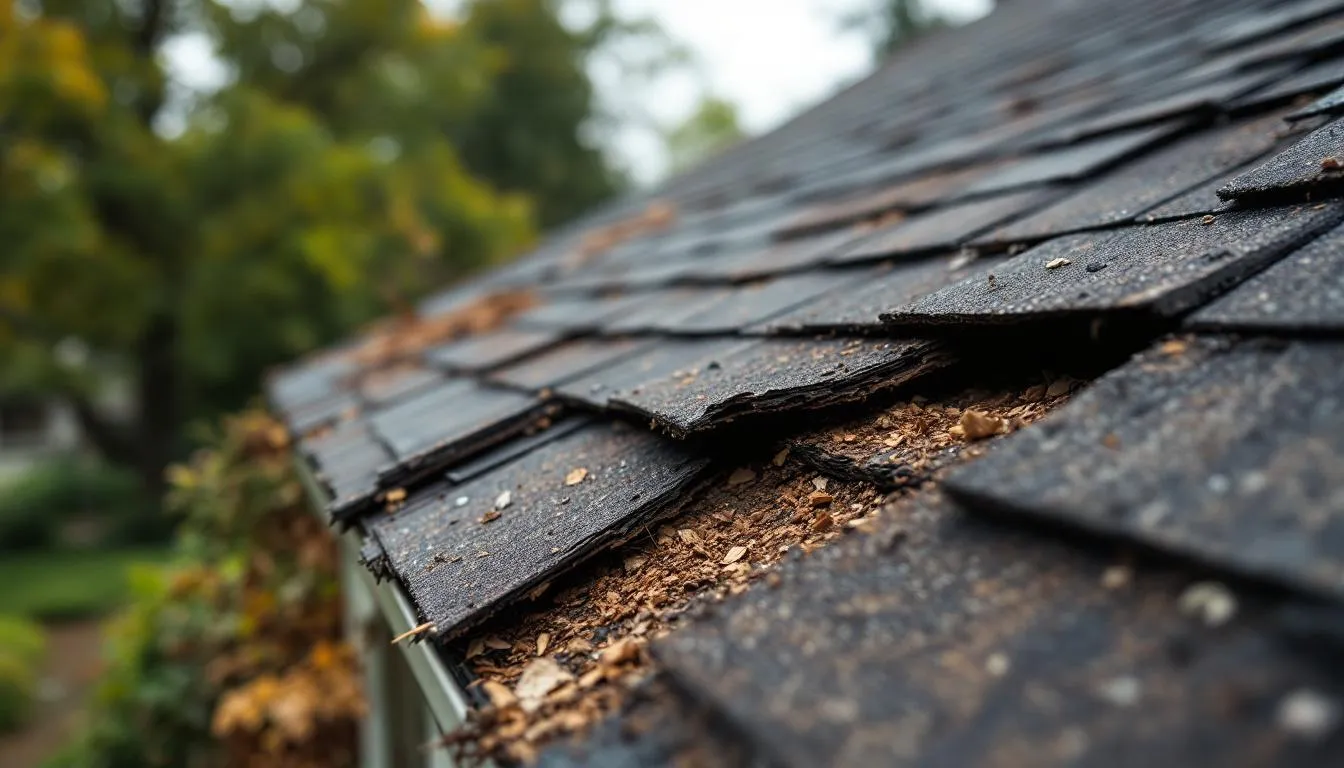
Telltale Signs
Warning Signs to Watch For
- Visible bare patches or dark exposed decking visible from the street or yard
- Shingle pieces or granule piles collecting in gutters or on the ground after a storm
- Curled or lifted shingle edges around the repair zone
- Water stains appearing on attic sheathing or ceiling drywall after rainfall
- Daylight visible through the attic when viewed from below
- Tar paper or felt underlayment flapping in the wind along roof edges
Root Causes
What Causes Missing or Blown-Off Shingles?
High Wind Storm Damage
Raleigh's summer storms regularly produce straight-line winds that exceed 70 mph. Older three-tab shingles lose their seal strip over time. The seal strip is the factory-applied adhesive that holds the tab flat against the shingle below it. Once that bond is gone, wind gets under the tab and peels the shingle right off the deck.
The Fix
Full Shingle Replacement with High-Wind Rated Materials
Damaged shingles are removed down to bare decking, and the deck is checked for soft spots. New architectural shingles rated for 130 mph winds are nailed using a six-nail pattern per shingle, following NC building code updates adopted after the 2012 storms. That is a stronger bond than the original four-nail installation.
Aged Sealant Strip Failure
Raleigh's humidity swings between very wet summers and dry winter cold snaps. That cycle breaks down the asphalt sealant strip on the underside of shingles. The sealant strip is the factory-applied adhesive that bonds each shingle to the one below it. Once it fails, shingles are held by nails alone and can lift in the 40 to 50 mph gusts that come with spring pop-up storms.
The Fix
Re-Sealing and Partial Shingle Replacement
Loose shingles get hand-sealed with roofing adhesive and re-fastened with ring-shank nails. Any shingle with a cracked or brittle tab gets swapped out completely.
Improper Original Nailing Pattern
Many Triangle homes built during the 1990s construction boom were roofed fast. Crews set nail guns too high, driving nails through the shingle tab instead of the nailing strip. Raleigh's freeze-thaw cycles in January and February work those shingles loose all winter until the first spring storm pulls them off.
The Fix
Nail Pattern Correction and Shingle Re-Fastening
A full inspection finds every shingle with a bad nail. Each one gets lifted, the old nails come out, and new nails go into the manufacturer's nailing strip. Then the shingles are sealed to meet code wind resistance.
Self-Diagnosis
Which Cause Applies to You?
Check the signs you're observing to narrow down the likely root cause before your inspection.
| What You're Seeing | High Wind Storm Damage | Aged Sealant Strip Failure | Improper Original Nailing Pattern |
|---|---|---|---|
| Shingle loss concentrated on one side of the roof facing the prevailing storm direction | |||
| Multiple shingles loose across the entire roof surface, not just storm-side | |||
| Shingles found in yard still intact but cleanly popped off at the nail line | |||
| Granule loss concentrated at shingle edges with curling visible before storm | |||
| Attic water staining appearing immediately after a single heavy rain event | |||
| Nails protruding or visible at shingle edges when viewed from the roof surface |
Free Quote
Get a free quote in Raleigh
No obligation — tell us what's going on and we'll text you back shortly.
Other Problems
Services That Fix This
Missing or Blown-Off Shingles Near You
Also Helpful